Myanmar committed genocide against Rohingya minority, world’s top court rules
Judgment finds ‘intent to destroy a substantial part of the Rohingya population’ after case seen as critical test for dealing with most serious of state crimes
Myanmar committed genocide against its Rohingya minority during a 2017 military campaign, the world’s highest court has ruled, in a historic and unprecedented decision.
The judgment from the international court of justice (ICJ) – which has never previously found a state responsible for genocide – ends a seven-year legal battle that was seen as a critical global test for dealing with the most serious of all state crimes.
The ICJ president, Yuji Iwasawa, said a majority of nine judges on the 15-seat court found that “the Republic of the Union of Myanmar has committed genocide against the Rohingya”.
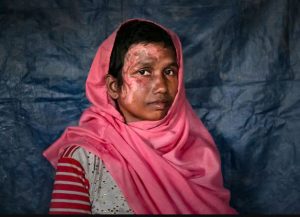
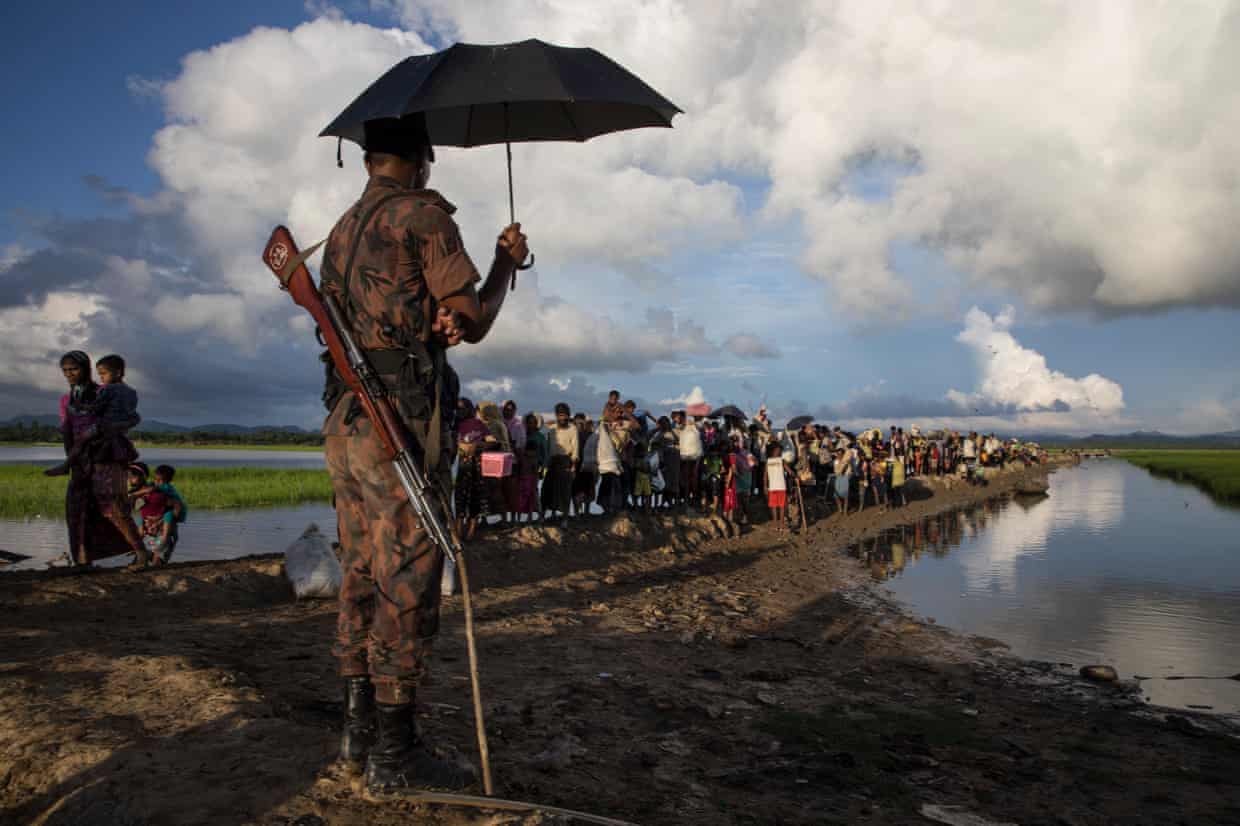
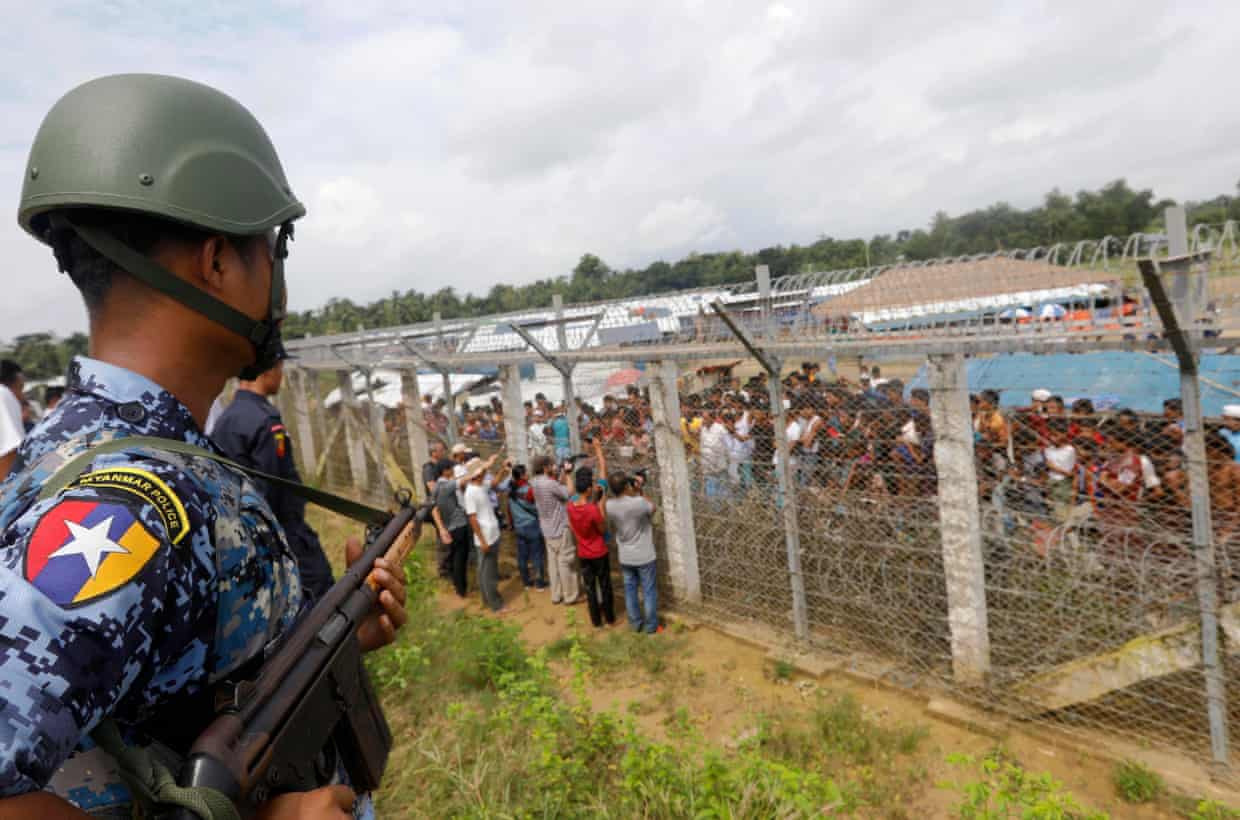
The 2016-17 campaign by Myanmar’s military forced more than 700,000 mostly Muslim Rohingya to flee across the border into Bangladesh, arriving with reports of mass killings of adults and children, gang-rapes and burned-down villages.
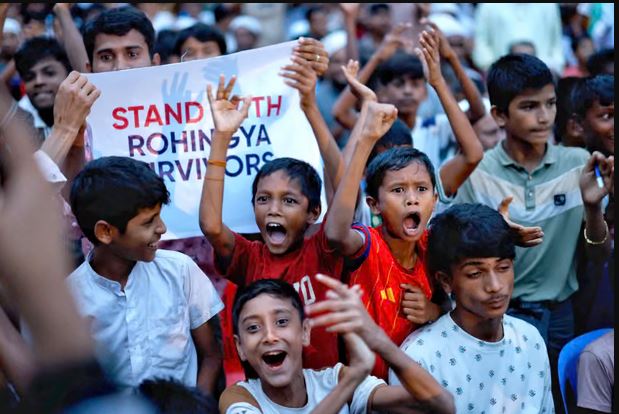
Nearly a decade later, in a refugee camp in Bangladesh, crowds of Rohingya people watching on outdoor TV screens leaped up in celebration and applause as the final verdict was read out.
One Rohingya survivor, Yousuf Ali, had travelled to the court to hear the verdict. “Today, we have finally been heard, and it is a profound relief,” he said. “This judgment gives hope to our children and the next generation of Rohingya. But our fight is not over.”
Governments had been anxiously awaiting the decision handed down in the Netherlands, where the UN-run court is based, in part because the ruling will set a precedent for genocide claims, notably a high-profile case against Israel.
In what could become a crucial factor for the Gaza case, where Israel claims its mass killings are part of a counter-terrorism operation, judges dismissed Myanmar’s claims of carrying out legitimate military operations against insurgents.
Genocide, defined after the Nazi Holocaust by a 1948 UN convention, is harder to prove than war crimes because it requires evidence of specific “intent” to destroy a national, ethnic, racial or religious group. Iwasawa said during the reading of the decision that the court was “fully convinced that Myanmar committed acts falling under … the genocide convention with an intent to destroy a substantial part of the Rohingya population in Myanmar”.
After the ruling, Britain’s foreign minister, Ed Miliband, said the government was expelling Myanmar’s defence attaché and called “urgently” for a session at the UN security council, the body that has the power to enforce ICJ rulings.
The case was raised by the Gambia, a Muslim-majority state, on behalf of Myanmar survivors. It rested on claims of genocidal statements and “patterns of conduct” that showed attempts to destroy the group during assaults on Rakhine state, including gunning down people as they fled and blocking their return.