The former general is separately being investigated by the international criminal court (ICC), which prosecutes individuals and not states like the ICJ, on allegations of crimes against humanity. He was installed as civilian president in April after elections that were widely condemned as a sham, and has made efforts to rebuild diplomatic ties.
For many onlookers, the ICJ decision will hold relevance far beyond Myanmar, as it will provide the strongest hint of how judges might assess the seminal genocide case brought by South Africa against Israel over its campaign in Gaza.
The cases have much in common, with an ethnic group targeted by a powerful military, although Israel has far stronger diplomatic backing from the US.
The judgment comes as Washington has been on the offensive against international human rights bodies, including sanctioning the ICC. Washington technically already considers the Rohingya crisis to be a genocide, based on a decision by the Biden administration.
Min Aung Hlaing, president of Myanmar, speaks during a meeting with Vladimir Putin in the Kremlin in August. Photograph: Alexander Zemlianichenko/Pool AP/AP
However, Trump’s UN ambassador, Mike Waltz, warned that the ICJ “must not be allowed” to establish a standard for genocide that could be used against “allied soldiers”, a statement that will be relevant for Israeli troops.
Supporters of the Myanmar case say the judgment should compel states to block arms transfers and jet fuel supplies. While the court does not have the means to enforce its decisions, they have been respected in the past, and the UN security council could give it strength, although divisions, especially between the US and China, make this unlikely.
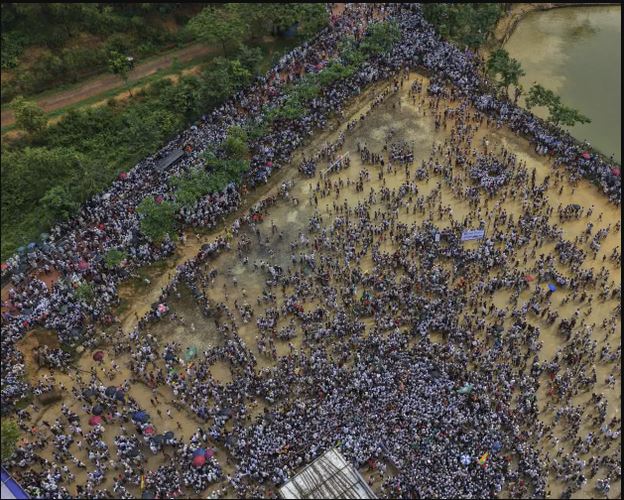
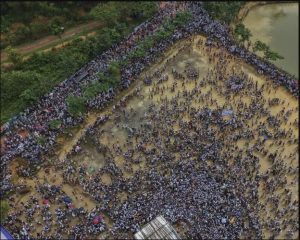
More than 1 million Rohingya remain in Bangladesh, in the world’s largest refugee settlement. Fewer than 600,000 are estimated to remain in Myanmar.
A displaced Rohingya living inside Myanmar told the Guardian he hoped the judgment would “help end decades of persecution and discrimination”.
“We are not asking for sympathy alone,” he said. “We are asking for justice, recognition, equal rights and a future in which our children can live safely and with dignity in their own homeland.”