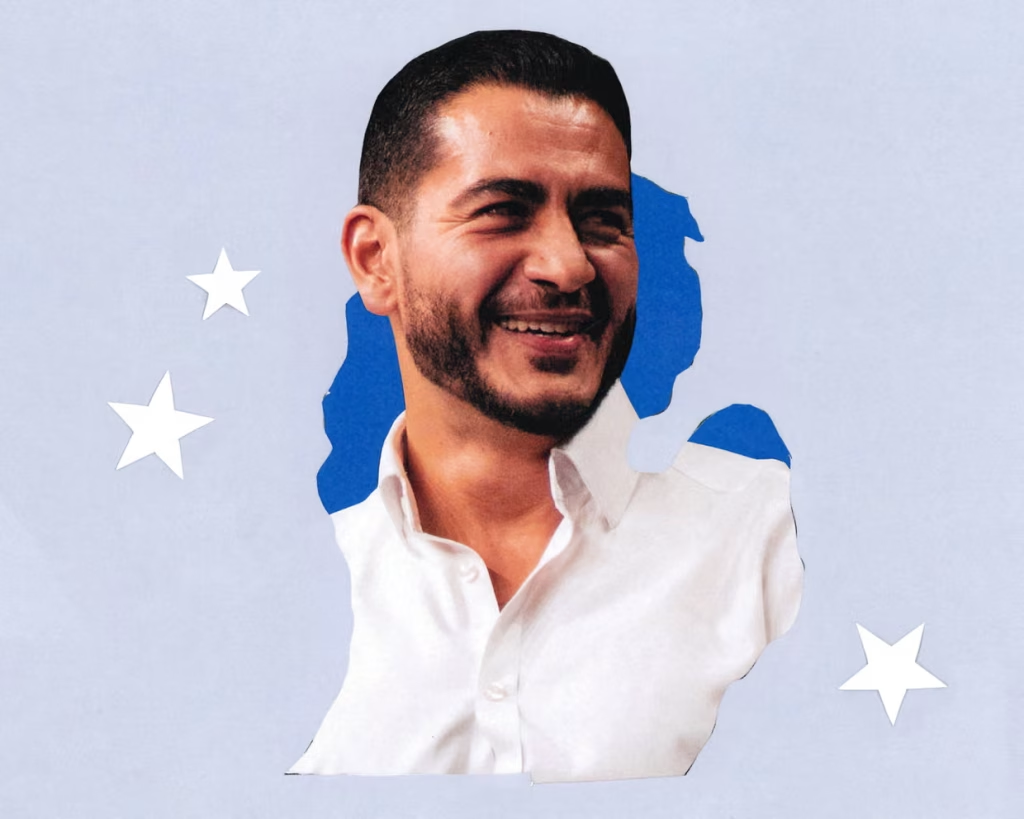
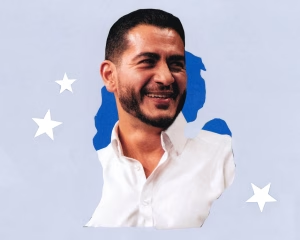
Republicans cast the general election as a referendum on the Democratic left, and El-Sayed’s nomination prompted Trump to call him a “communist”, and to slander him as a “jihadist” and member of the Egyptian Muslim Brotherhood.
The race was seen as a test of whether a progressive insurgent could win a swing state.
The pro-Israel lobby Aipac, through its Super Pac United Democracy Project, spent about $30m in the primary trying to stop El-Sayed, a record for a single race. More than $220m in total ad spending had been poured into the general election by mid-October by both parties, according to AdImpact.
In his victory speech, he said: “We want our taxes spent here, for schools here, and healthcare here, and infrastructure here. We don’t want our money sent to do apartheid, or genocide, or war.”
Rogers had backed Trump’s aggressive tariff policy and war with Iran, before breaking with the president on both in the closing weeks of the campaign, calling for an end to the US-Canada trade war and for swift conclusion to the Iran conflict. He has previously opposed the Affordable Care Act, defended the Trump administration’s immigration enforcement, and has repeated Trump’s false claims about the 2020 election.
Republicans had sought to portray El-Sayed as too far left for a swing state. A Fox News poll in August found 54% of Michigan voters thought his positions were too extreme, though 51% also said Rogers was too close to Trump.