PM Shehbaz, CDF Asim Munir, ministers to leave for Switzerland tomorrow: Iran says US naval blockade lifted, final deal talks to begin this week
TEHRAN: An Iranian deputy foreign minister on Tuesday said the two-month US naval blockade on Iranian ports had been lifted ahead of the planned formal signing of a deal ending the war.
“The lifting of the blockade was something we had emphasised from the outset. It has now begun, and the blockade has been lifted prior to the formal signing” scheduled for Friday, said Iranian Deputy Foreign Minister Majid Takht-Ravanchi, according to the government’s website.
Iran said talks with the United States on its nuclear programme and sanctions relief would likely begin later this week, as President Donald Trump’s announcement that the Strait of Hormuz would reopen sent oil prices tumbling.
Officials say negotiations over a final deal will take place within a 60-day window after the memorandum of understanding to end nearly four months of war triggered by US-Israeli strikes on Iran is physically signed.
“Likely on Friday, at a location to be determined… a new round of negotiations between Iran and the United States to reach a final agreement will begin,” Iranian Foreign Minister Abbas Araghchi said. “In the final agreement, decisions will be made on the nuclear issues and the lifting of sanctions.”
According to Iran’s deputy foreign minister Majid Takht-Ravanchi, the Islamic republic’s top negotiator Mohammad Bagher Ghalibaf will attend the signing in Switzerland, which Bern said would take place at the luxury Burgenstock resort overlooking Lake Lucerne.
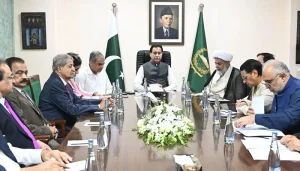
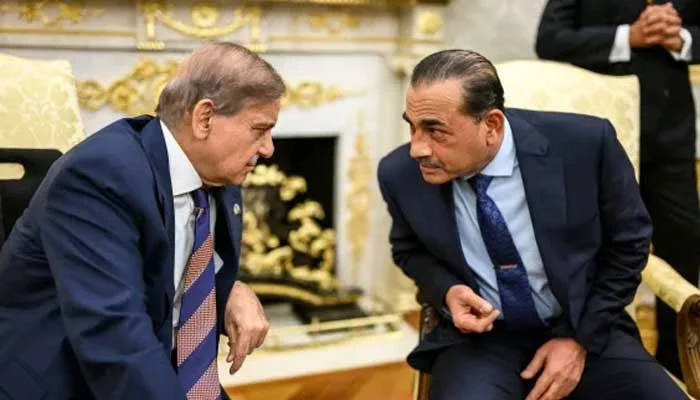
Prime Minister Shehbaz Sharif is scheduled to depart on Thursday (tomorrow) to attend the historic peace agreement ceremony between Iran and the United States in Switzerland. He will be accompanied by Deputy Prime Minister/Foreign Minister Ishaq Dar, other federal ministers and senior government officials.
Field Marshal Syed Asim Munir will also accompany the prime minister during the visit. Pakistan will play an important role in the event as the host and facilitator of the peace initiative.
The mountainside venue “was proposed by Pakistani and Qatari mediators, as well as by the US and Iran,” the Swiss foreign ministry told AFP. The US side will be represented by Vice President JD Vance, who said Trump might also attend.
The developments came after Trump said an Iranian blockade on the crucial Hormuz strait oil and gas route would be fully lifted by Friday, which would be a major boost to the global economy. “Ships are starting to move, many loaded up with Oil, out of the Strait of Hormuz,” Trump said Monday.
Optimism over the reopening of Hormuz has sent the price of the international benchmark Brent North Sea crude tumbling below $80 a barrel, a three-month low.
The US had, in retaliation, imposed its own blockade on Iranian ports. Iranian state television said Iranian oil tankers and other vessels had resumed shipping following the deal, with Takht-Ravanchi saying ths US blockade “has been lifted prior to the formal signing”.
Sporadic episodes of violence since an April ceasefire had threatened a deal, but weeks of indirect negotiations mediated by Pakistan and Qatar built momentum for an interim agreement.
Yet a comprehensive agreement on Iran’s nuclear ambitions and Western sanctions remains elusive.
Washington and close ally Israel are pressing to strip Iran of its stockpile of highly enriched uranium, said to have been buried by US strikes last year, while Iran has insisted on its right to enrichment.
Iran’s ultraconservative newspaper Vatan-e Emrooz praised the agreement as a “Trump surrender document”. But Araghchi struck a more cautious note.
“We have a history of broken commitments… we have a history of agreements being torn up. All of this is present in our minds,” he said.
A senior US administration official, however, said Trump, Vance and negotiator Ghalibaf had already signed the text electronically. In a flurry of interviews to talk up the deal, Vance said no US taxpayer money would go to Iran under the deal, as Iranian media reported $12 billion of frozen assets would be released.
Vance told NBC that nuclear inspectors would also be allowed to enter Iran.
Analysts have warned that the parallel conflict in Lebanon between Israel and Iran-backed Hezbollah presents the biggest threat to the diplomatic thaw.
That theatre of the conflict could be “the biggest ultimate spoiler” of the coming negotiations, said Ross Harrison, a senior fellow at the Middle East Institute.
Lebanon’s president and prime minister on Tuesday discussed preparations for a new round of direct talks with Israel scheduled to begin next week, seeking a permanent truce and withdrawal of Israeli troops from the country’s south, according to a presidency statement. But Israeli figures quickly condemned the US-Iran deal that included Lebanon, and Prime Minister Benjamin Netanyahu pledged that the country’s forces would remain in Gaza, Lebanon and Syria “for as long as necessary”.
Araghchi however said ending the war on all fronts including Lebanon was “the most important” issue in the peace deal. “Ending the war in Lebanon is an inseparable part of the complete end of the war”.
The Israeli military said Tuesday it conducted strikes in south Lebanon after intercepting rockets fired by Hezbollah against its troops in the area, despite a US-Iran deal that includes the Israel-Hezbollah war.
China’s top diplomat told his Pakistani counterpart on Tuesday that the next phase of negotiations between the United States and Iran—which Pakistan has helped mediate—will be “more difficult”.
In a phone conversation ahead of the planned signing on Friday of a US-Iran memorandum of understanding to end their war, Chinese Foreign Minister Wang Yi told Deputy Prime Minister and Foreign Minister Ishaq Dar that “it is foreseeable that, compared with the first stage, the second stage of negotiations will be more difficult”.
Wang added that the United Nations Security Council “should also play a greater role” in supporting these talks, according to a statement from Beijing’s foreign ministry. “The current consensus is far from the final destination, rather it is a new starting point,” Wang said.
“Achieving lasting peace in the Middle East and Gulf region still requires unremitting efforts from all parties,” Wang said, adding that China was willing to work with Pakistan to promote peace.
Pakistani officials have previously said China, Islamabad’s close ally and Iran’s top trading partner, played a key role in supporting its mediation efforts.
Pakistan’s foreign ministry said Wang and Dar agreed during their call to continue “engagement for the peaceful settlement of all outstanding issues”, including the Strait of Hormuz maritime oil route that is subject to competing blockades that have roiled energy markets. “They noted the importance of opening of the Strait of Hormuz for the global economy, energy security, and international trade,” a ministry statement said.
President Trump said the United States has “no obligation” to invest in Iran even after its deal with the Islamic republic to end the Middle East war. “We are not investing any money” in Iran, Trump said at the G7 summit in France after talks with the emir of Qatar, adding that the main focus of the deal was that Iran would not acquire a nuclear weapon and that “all hell” would “rain down” on the country if it did.
Iran’s top negotiator Mohammad Baqer Qalibaf said on Tuesday in a call with Lebanon’s Parliament Speaker Nabih Berri that Israel must withdraw from “occupied areas” in Lebanon. “The people of southern Lebanon must return to their homes”, Qalibaf added in a post on his Telegram channel.
Lebanon said Israeli strikes killed four people in the country’s south on Tuesday as Israel said it intercepted Hezbollah rockets and launched raids.
Hezbollah’s chief thanked Iran’s top negotiator for helping stop the “Israeli-American aggression” on Lebanon, after the announcement of a US-Iran deal on ending the Middle East war that includes Lebanon. In a message to Iranian parliament speaker and top negotiator Mohammad Bagher Ghalibaf, Hezbollah’s Naim Qassem expressed “profound gratitude” for Iran’s efforts “to compel the Israeli entity to an immediate and permanent cessation of military operations on all fronts including in Lebanon”.
Shipping through the Strait of Hormuz stayed at a trickle Tuesday, maritime trackers indicated, two days after the US promised to reopen it under an agreement with Iran to end their war.
As of 1500 GMT on Tuesday, tracking platform Kpler had detected just four crossings of the strategic waterway that day by vessels carrying raw materials.
Five were detected on Monday—a similar rate to traffic during the week before the US-Iran agreement to end the Middle East war, announced late Sunday.
Qatar, a key negotiator in the deal to end the war between the US and Iran, said on Tuesday it believed the agreement could deliver security to the Middle East.
“We are cautiously optimistic that the signing of the memorandum of understanding will lead to the next phase of regional security through the talks that will take place on the nuclear programme and on other issues,” foreign ministry spokesman Majed Al Ansari told reporters at a regular press briefing.
Al Ansari confirmed both Pakistani and Qatari officials would be present for the formal signing of the memorandum on Friday.
Declining to comment on the contents of the deal, the spokesman urged “regional dialogue” after the accord is inked if trust with Iran is to be rebuilt.
The head of the International Energy Agency Fatih Birol said Tuesday that “unconditionally” opening the Strait of Hormuz to Gulf tanker traffic was essential to ending the shock from soaring oil and gas prices to economies worldwide.
Iranian authorities on Tuesday executed two men after convicting them for their alleged role in anti-government protests that peaked in January, the judiciary said.
The son of the ousted shah of Iran spoke out Tuesday against any deal with Iran that leaves the Islamic government in place. Speaking after meeting MPs during a visit to London, 65-year-old Reza Pahlavi said the international community should back opposition protesters rather than making peace with Iran.
The US will allow Iran to immediately begin selling oil and fuel under the memorandum of understanding the two sides reached to end the war, a senior US official said on Tuesday.
Oil prices dropped below $80 a barrel Tuesday on optimism over the promised reopening of the Strait of Hormuz, easing inflation pressures on global economies.
Wall Street was cautious, with the Dow adding 1.0 percent, but the broader S&P 500 dipped less than 0.1 percent and the tech-heavy Nasdaq shed 0.4 percent.
Europe’s main markets closed higher, while Asia ended mixed.
Saudi cabinet chaired by crown prince reiterated importance of restoring freedom of navigation in the Strait of Hormuz to its status before war.
Germany is prepared to participate in helping to preserve peace in the Middle East following an interim deal between Iran and the United States to end the war in the region, Chancellor Friedrich Merz said on Tuesday.
Shipowners will not resume transit through the Strait of Hormuz for weeks until they are confident that the US-Iran peace deal is “material”, the CEO of Japan’s Mitsui O.S.K. Lines 9104.T told the Financial Times in an interview published on Tuesday.
Iran will soon begin connecting its electricity grid to Qatar’s, with studies in the final stages and the project entering the early phase of execution, Iran’s Energy Minister said on Tuesday according to Tasnim news agency. Abbas Aliabadi added that studies were also underway to link Iran’s power grid with those of other Gulf countries.
President Trump said he was willing to send his interim deal to end the war with Iran for review by the US Congress, as lawmakers, including many of his fellow Republicans, said they were largely in the dark about the pact. Democrats have questioned Trump’s latest promise of a peace deal.
“We’ve been told dozens of times that the war is over and dozens of times we’ve been disappointed,” Senate Democratic leader Chuck Schumer of New York said as he opened the Senate session on Tuesday.
Schumer called on the Trump administration to hold a classified briefing for Congress’ “Gang of Eight,” a group of intelligence committee and congressional leaders typically briefed on major national security developments. Schumer also said officials should brief the entire Congress, and inform the American people.
Senator John Thune of South Dakota, the Senate’s Republican leader, told reporters at the Capitol on Tuesday that party members were pressing Trump to provide the text of the MOU. Other Republicans joined Democrats in expressing frustration at the lack of information. “If it’s a secret deal, then how can I take it seriously?” Republican Senator Thom Tillis of North Carolina told reporters on Monday evening.
A $300 billion private fund designed to trigger investment into Iran is outlined in the US-Iran framework agreement and more than half that sum has already been committed, a source with direct knowledge of the deal told Reuters.
Meanwhile, Al Arabiya English has obtained a copy of the 14-point agreement expected to be signed on Friday between Washington and Tehran.
1. The Islamic Republic of Iran and the United States, together with their allies in the current war, declare upon the signing of this Memorandum of Understanding an immediate and permanent end to the war on all fronts, including Lebanon, and undertake that from now on they will not launch any hostile action against each other, and will refrain from the threat or use of force against each other. The final agreement will confirm the provisions of this Article and the remaining Articles.
2. The Islamic Republic of Iran and the United States undertake to respect each other’s sovereignty and territorial integrity, and to refrain from interfering in each other’s internal affairs.
3. The Islamic Republic of Iran and the United States undertake to negotiate and reach a final agreement within a maximum period of 60 days, extendable by mutual consent.
4. Immediately upon the signing of this Memorandum of Understanding, the United States Lift the naval blockade and prevent any interference or obstruction against the Islamic Republic of Iran, and restore traffic within a maximum of 30 days to its full capacity; the traffic of ships shall be proportional to the pre-war volume of traffic on the part of the Islamic Republic of Iran. The United States also undertakes to withdraw its forces from the surrounding areas within 30 days after the final agreement.
5. Upon signing this Memorandum of Understanding, the Islamic Republic of Iran will immediately take steps to ensure that the movement of merchant ships from the Persian Gulf to the Sea of Oman and vice versa is resumed within 30 days to the pre-war volume, taking into account the need for the removal of technical obstacles and the neutralization of mines by Iran.
6. The United States undertakes, together with its regional partners, to create a comprehensive plan agreed upon by both parties for the rehabilitation and economic development of the Islamic Republic of Iran, While ensuring financing of at least $300 billion. The implementation mechanism of this plan, as part of the final agreement, will be formulated within 60 days.
7. The United States commits to ending, on a schedule to be agreed upon as part of the final agreement, all types of sanctions currently facing the Islamic Republic of Iran, including resolutions of the United Nations Security Council and the Board of Governors of the International Atomic Energy Agency (IAEA), and all unilateral U.S. sanctions, both primary and secondary.
8. The Islamic Republic of Iran reiterates that it will never produce nuclear weapons. The Islamic Republic of Iran and the United States have agreed that the fate of enriched material and the fate of all other mutually agreed nuclear-related issues, including Iran’s nuclear needs, will be adequately addressed in a final agreement; the final agreement will confirm the provisions of this Article.
9. The Islamic Republic of Iran and the United States agree that, pending a final agreement, they will maintain the status quo: Iran will maintain the status quo on its nuclear program, and the United States will not impose new sanctions on Iran or strengthen its forces in the region.
10. The United States undertakes that immediately after the signing of this Memorandum of Understanding, and until the date of the lifting of sanctions, the United States Treasury Department will issue waivers for exports of Iranian crude oil, petrochemical products and their derivatives, and all related services, including banking, insurance, transportation, and the like.
11. The United States undertakes that, in light of the progress of negotiations towards a final agreement, frozen or restricted funds and assets of the Islamic Republic of Iran will be released and made fully available. These funds, whether held in the master account or transferred, will be used for any final beneficiary payment determined by the Central Bank of the Islamic Republic of Iran and will be fully available for use. The United States undertakes to issue all necessary permits and licenses on this basis.
12. The Islamic Republic of Iran and the United States agree that an implementation mechanism will be established to oversee the successful implementation of and future commitment to the Final Agreement.
13. Following the signing of this Memorandum of Understanding, and upon receipt of assurances regarding the commencement of implementation of Articles 4, 5, 10, and 11 of this Memorandum of Understanding, and the continued implementation of these steps, the Islamic Republic of Iran and the United States will enter into negotiations for a Final Agreement solely with respect to the remaining Articles.
14. The final agreement will be approved through a binding resolution of the UN Security Council.
Iran’s military threatened on Tuesday to respond to Israel after strikes in southern Lebanon killed four people.
“If the child-killing army of the Zionist regime does not put an end to its acts of aggression in southern Lebanon, it should await a harsh response from the powerful armed forces of the Islamic Republic of Iran,” said the Iranian military´s central command Khatam al-Anbiya.
It added that Israel had violated the ceasefire in Lebanon “84 times” since the deal was announced.
The US Senate on Tuesday narrowly blocked the latest Democratic-led effort to end the Iran war until it is authorised by Congress, the ninth by Democrats since Israel and the United States began their air attacks on Iran in February.
The Senate voted by 48-47 to block the resolution under the war powers law, which followed a framework agreement announced this week by the White House and Tehran for a further ceasefire and talks to end the conflict.The vote was largely along party lines.