PM directs increase in strategic petroleum reserves
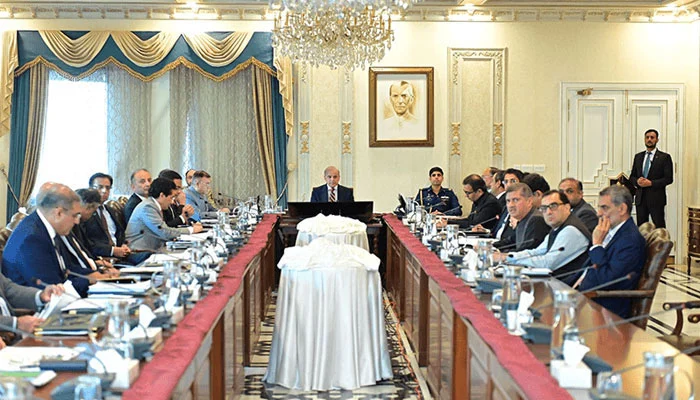
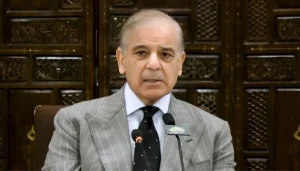
ISLAMABAD: Prime Minister Shehbaz Sharif has directed an increase in the country’s strategic reserves of petroleum products to bolster energy security and ensure uninterrupted supply in case of any disruption.
The directive came during a meeting of the Cabinet Committee on Energy (CCoE) on Tuesday, which the prime minister chaired and which approved the long-awaited amended Brownfield Refining Policy 2023, paving the way for refinery upgrade projects worth an estimated US$5-6 billion. The amended policy includes six new provisions, among them stability and parity clauses aimed at reassuring foreign investors expected to finance the refinery modernisation projects. However, refineries that failed to sign Upgrade Agreements with the Oil and Gas Regulatory Authority (Ogra) by the October 22, 2024 deadline will face financial penalties with retrospective effect.
The prime minister commended Petroleum Minister Ali Pervaiz Malik and his team for steering the amended Brownfield Refining Policy through the CCoE, describing the modernisation of Pakistan’s refining sector as a national priority for strengthening the country’s long-term energy security.
Shehbaz said upgrading existing oil refineries was essential to meet the country’s growing energy demand, reduce reliance on imported refined petroleum products and enable the production of cleaner Euro-V compliant fuels. He directed all relevant ministries and institutions to ensure timely implementation of the amended policy, warning that delays would not be tolerated.
He also instructed authorities to undertake reforms within Ogra to promote transparency, competition and investment in the energy sector. To attract foreign investment, he directed the Petroleum Division to organise investment roadshows in Qatar, Saudi Arabia and other Gulf countries to showcase opportunities under the amended Brownfield Refining Policy.
The CCoE was informed that the revised policy would facilitate the production of Euro-V gasoline and diesel, significantly reduce furnace oil output, improve environmental standards and strengthen Pakistan’s energy security. Officials also briefed the committee on the progress of refinery upgradation projects and ongoing reforms in the downstream petroleum sector.
Reacting to the approval, Attock Refinery Limited (ARL) Chief Executive Officer Adil Khattak welcomed the government’s decision, calling it a landmark step after more than six years of consultations, policy revisions and engagement among the government, refineries and independent financial and legal advisers.
Khattak said the approval of the amended policy would finally enable the country’s refineries to move ahead with much-needed modernisation projects involving investments of around US$5-6 billion.
Khattak, however, expressed disappointment that the amended policy unfortunately and unfairly penalises refineries such as ARL and National Refinery Limited (NRL), despite the fact that both companies had authorised the signing of their Upgrade Agreements before the October 22, 2024 deadline, initialed the agreements with Ogra and arranged the required bank guarantees.
Nevertheless, he welcomed the approval of the amended policy and looked forward to initiating the upgrade project without further delay, while also stating that they would approach the appropriate forum for redress of their grievance.
The 129-page summary approved by the CCoE mentions a comprehensive overhaul of Pakistan’s Brownfield Refinery Policy, offering existing refineries a fresh seven-year package of fiscal incentives in exchange for multi-billion-dollar investments to produce Euro-V compliant fuels while introducing an elaborate compliance, monitoring and enforcement regime through legally binding Upgrade Agreements with Ogra.
The amendments, which will supersede the Refining Policy 2023 after approval, are intended to modernise the country’s ageing refining sector by increasing the production of motor gasoline (MS) and high-speed diesel (HSD), significantly reducing furnace oil output, improving fuel quality and enhancing Pakistan’s energy security.
Under the newly approved policy, all existing refineries opting for upgradation, modernisation or expansion will become eligible for incentives provided they execute a legally binding Upgrade Agreement with Ogra within 90 days of notification of the amended policy.
Among the six new insertions approved by the CCoE are stability and parity provisions designed to provide confidence to international lenders and foreign investors financing refinery upgrade projects. The stability regime seeks to protect refiners against adverse changes in taxation, fiscal policies, environmental regulations, licencing requirements, foreign exchange regulations and other government actions that could negatively affect project economics or implementation timelines. The Upgrade Agreements will also include provisions dealing with political force majeure, prolonged force majeure, government-related delays and mutually agreed exit mechanisms.
The policy envisages significant changes in refinery configuration and product mix across the country’s five refineries.
Meanwhile, chairing a review meeting on Right-Sizing of the Federal Government and Enhancing Government Efficiency, Prime Minister Shehbaz Sharif observed that implementation of the policy had positively impacted the national economy. He directed authorities concerned that implementation of right-sizing measures be accelerated to further improve government performance.
Under the right-sizing initiative, the Utility Stores Corporation, Pakistan Public Works Department (Pak PWD) and Passco have already been closed, resulting in savings for the national exchequer, he said.
The prime minister instructed the Right-Sizing Committee to finalise its remaining recommendations within one month.
Also on Tuesday, the prime minister met a US Congressional delegation, comprising Rep Ryan Zinke and Rep Michael Baumgartener, at the PM House and felicitated the Congressmen and American people on the 250th anniversary of US Independence, and conveyed his warm regards and best wishes for President Donald Trump.
Deputy Prime Minister/Foreign Minister Ishaq Dar, Foreign Secretary Ambassador Amna Baloch and US Chargé d’Affaires Natalie Baker were also present on the occasion, a PM Office news release said.
During the meeting, the prime minister welcomed both US Congressmen to Pakistan and said that their visit was a welcome step towards building stronger Pakistan-US ties.
The two sides agreed to increase the number and frequency of visits by Congressional delegations to Pakistan as well as visits of parliamentary delegations to the US. The visiting Congressmen lauded Shehbaz for Pakistan’s leading role in regional peace efforts.
After the meeting, the prime minister hosted a reception in honour of the delegation of US corporate sector executives who are visiting Pakistan. The delegation includes representatives of diverse sectors, including IT and technology, energy, mining and manufacturing.
Meanwhile, the prime minister chaired a high-level meeting to review the ongoing monsoon rains and resulting flood situation across Pakistan, the PM Office Media Wing said in a press release. He directed all relevant authorities to remain on high alert and ensure timely response measures in the ongoing monsoon season, by maintaining close coordination.
He directed the National Disaster Management Authority (NDMA), Provincial Disaster Management Authorities (PDMAs) and provincial governments to maintain continuous coordination and remain fully prepared to deal with any emergency arising from the ongoing monsoon season.
The prime minister directed the NDMA to provide timely weather forecasts and updates on the monsoon situation to all the federal and provincial institutions. He further asked Minister for Planning Ahsan Iqbal to chair the Flood Committee’s meetings on a daily basis to review the evolving situation and finalise response strategies.
The meeting was apprised that a major spell of monsoon rains was expected over the next two days in Azad Jammu and Kashmir, Gilgit-Baltistan and southern Sindh. Another significant monsoon spell is forecast to affect the country from the second week of September.
According to the briefing, the current monsoon spell had so far claimed 110 lives, 360 people were injured, 796 houses were damaged, besides causing death of 376 livestock.
The meeting was also informed that 700 sites had been identified across the country to store rainwater during the monsoon season, enabling its use for agricultural purposes during the dry season.
Separately, the prime minister chaired a review meeting on the progress of the Prime Minister’s Apna Ghar Scheme and directed the relevant authorities to accelerate the pace of its implementation, the PM Office Media Wing said in a press release. He urged both public and private sector banks to maximise financing to ensure the success of the initiative. He also instructed officials to formulate a comprehensive strategy for both vertical and horizontal housing development models under the scheme.
During the meeting, officials briefed the prime minister on the progress made in financing under the Apna Ghar Scheme.
They informed him that banks had so far approved financing worth Rs204 billion, while Rs27 billion had already been disbursed.
Chairing yet another meeting to expand access to finance for the business community, particularly small and medium enterprises (SMEs), the prime minister directed banks to speed up lending to the sector, a Prime Minister’s Office news release said. He directed the relevant authorities to expedite SME loan access and approved a three-tier governance structure to double business financing by 2028.
Prime Minister Shehbaz Sharif directed that access to loans for the business community, especially small and medium-sized enterprises, be expedited without delay. He also announced that the bank extending the highest volume of credit to the business sector, particularly SMEs, would be given a special award every year.
To institutionalise the push for improved access to finance, the prime minister approved a three-tier governance structure.