Pakistan’s Youth must lead nation’s future with skill and discipline: Sardar Masood Khan
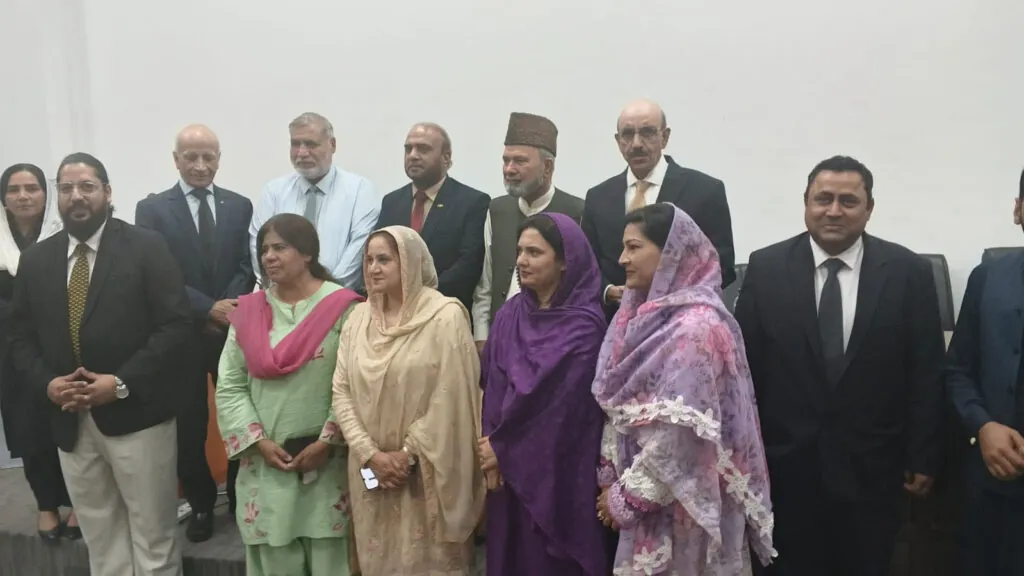
Islamabad,:Sardar Masood Khan, former President of Azad Jammu and Kashmir and former Ambassador of Pakistan to the United States and the United Nations, has stated that Maraka-e-Haq and Operation Bunyan-un-Marsoos marked a decisive turning point in the strategic history of South Asia, validating Pakistan’s deterrence capabilities and elevating the country’s diplomatic and technological stature globally.
Addressing students and faculty members at Muslim Youth (MY) University event, Ambassador Khan emphasized the critical role of Pakistan’s youth in shaping the country’s future, noting that nearly 64 percent of Pakistan’s population consists of young people. Referring to international projections, he said that by 2047 Pakistan could emerge among the world’s largest economies if its younger generation develops the skills, discipline, and strategic outlook necessary for national advancement.
Ambassador Khan observed that Maraka-e-Haq demonstrated, beyond doubt, the credibility of Pakistan’s deterrence posture. He stated that despite India’s assumptions regarding its numerical superiority, strategic partnerships, and advanced weaponry, Pakistan established military superiority during the opening hours of the conflict through coordinated and integrated operations.
He explained that Pakistan fought the conflict across four major fronts: military operations, diplomacy, narrative warfare, and national unity. According to Ambassador Khan, the Armed Forces successfully utilized modern technologies including drones, cyber warfare capabilities, digital systems, missile platforms, and indigenous defence production to counter Indian aggression effectively.
Highlighting the information dimension of the conflict, Ambassador Khan noted that Pakistan’s media and digital community successfully countered misinformation campaigns and disinformation propagated by Indian media outlets. He stated that Pakistan’s narrative gained international credibility because Pakistani institutions and media organizations remained committed to fact-based reporting and strategic communication.
He further pointed out that Pakistan’s diplomatic outreach during and after the conflict proved equally significant. Pakistan actively engaged international partners, including the United States and other major powers, while consistently advocating dialogue, restraint, and independent investigations into regional incidents. He stated that Pakistan’s diplomatic conduct enhanced its global standing and contributed to strengthening relations with major international actors.
Discussing the broader regional implications, Ambassador Khan stressed that the unresolved Jammu and Kashmir dispute remains the central flashpoint between Pakistan and India and continues to pose a serious threat to regional peace and stability. He reiterated that durable peace in South Asia would remain impossible without resolving the Kashmir dispute in accordance with the aspirations of the Kashmiri people and relevant United Nations resolutions.
Ambassador Khan also urged students and researchers to deepen their understanding of developments in Indian Illegally Occupied Jammu and Kashmir, criticizing what he described as widespread intellectual disengagement regarding the issue. He emphasized that informed scholarship, strategic communication, and sustained diplomatic engagement are essential for advancing Pakistan’s position internationally.
Concluding his remarks, Ambassador Khan urged the youth of Pakistan to remain inspired, disciplined, and technologically equipped, emphasizing that the future strength and prosperity of Pakistan will depend on the vision, competence, and commitment of its younger generation.