India can’t stall arbitration on water: The Hague court
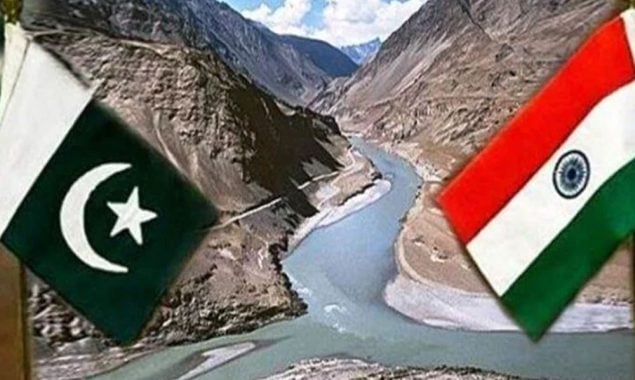
ISLAMABAD: In a decisive blow to India’s efforts to derail ongoing arbitration over its hydropower projects on Western rivers, the Court of Arbitration in The Hague ruled Friday that it retains full jurisdiction in the case brought by Pakistan under the Indus Waters Treaty, despite New Delhi’s April 2025 declaration to hold the treaty “in abeyance.”
In a unanimous and binding Supplemental Award, the Court rejected India’s attempt to sidestep the proceedings, stating that a party cannot unilaterally affect the Court’s competence after the dispute has already been initiated. The ruling reinforces the Court’s earlier 2023 decision on jurisdiction and ensures the continuation of arbitration over India’s run-of-river hydroelectric projects on the Indus, Jhelum, and Chenab rivers—projects Pakistan claims may violate the spirit and technical terms of the 1960 World Bank-brokered treaty.
The Hague-based tribunal emphasized that India’s unilateral decision—whether deemed a suspension or otherwise under international law—holds no legal weight in pausing the arbitration. The Court further underscored its mandate to proceed “in a timely, efficient, and fair manner,” reaffirming that legal responsibility prevails over political maneuvering.
The ruling also clarifies that the competence of the Neutral Expert, appointed in a separate parallel process by India, is similarly unaffected by Delhi’s recent stance—likely escalating tensions in the already fragile water-sharing arrangement between the two nuclear-armed neighbors.
The decision could set a significant precedent for future treaty-based arbitration, especially when one party attempts to opt out midstream. For Pakistan, it marks a legal and diplomatic win in its decades-long contention over India’s upstream projects, which Islamabad argues could compromise downstream water availability and treaty integrity.
It is to be noted that Indus Waters Treaty (1960) was brokered by the World Bank, the treaty allocated control over three Eastern rivers to India and three Western rivers to Pakistan, allowing limited Indian use of Western rivers for hydropower without altering flow.
The latest dispute centers around technical design features of Indian hydropower projects that Pakistan says violate the treaty’s safeguards. With the legal path now cleared, arbitration proceedings are expected to intensify in the coming months, with high geopolitical stakes on both sides of the Himalayan divide.
The long-running dispute stems from Pakistan’s 2016 arbitration request challenging India’s Kishanganga and Ratle dam designs, which Islamabad claims violate the technical provisions of the treaty. India, in response, launched parallel proceedings through a Neutral Expert and objected to the Court’s jurisdiction — objections now twice rejected by the arbitration panel.
Meanwhile, Pakistan welcomed the Supplemental Award by the Court of Arbitration in the Indus Waters matter that has been handed down today and made public on the website of the Permanent Court of Arbitration. Pakistan notes that the Court has affirmed its Competence in the light of recent developments and that unilateral action by India cannot deprive either the Court or the Neutral Expert, in the proceedings initiated by India, of their competence to adjudicate the issues before them. Pakistan looks forward to receiving the Court’s Award on the First Phase on the Merits in due course following the hearing that was held in Peace Palace in The Hague in July 2024.
The high priority, at this point, is that India and Pakistan find a way back to a meaningful dialogue, including on the application of the Indus Waters Treaty. To this end, and reaching out to India, Prime Minister of Pakistan Muhammad Shehbaz Sharif said on 24 June 2025, in widely publicised remarks, that Pakistan is “ready to engage in a meaningful dialogue with India on all outstanding issues, including Jammu & Kashmir, water, trade and terrorism.”