Ishaq Dar Says Makkah Defence Agreement Aims to Promote Regional Peace, Not Target Any Country
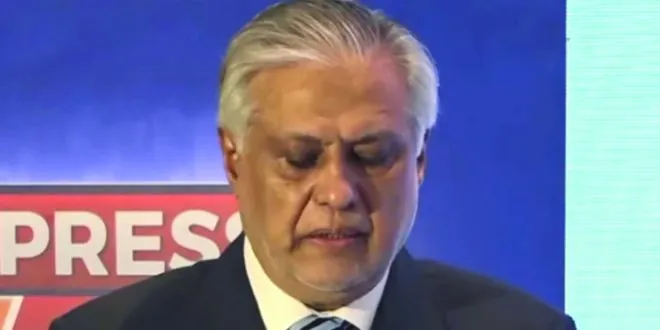
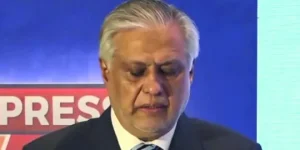
ISLAMABAD : Deputy Prime Minister and Foreign Minister Ishaq Dar on Tuesday said the Makkah Joint Defence Agreement (MJDA) involving Pakistan, Saudi Arabia and Türkiye was purely defensive in nature, aimed at strengthening collective security and promoting regional peace and stability, rather than targeting any country.
Addressing the inaugural session of Margalla Dialogue 2026 in Islamabad, Dar said the agreement reflected Pakistan’s commitment to collective security and credible deterrence. He reiterated that the arrangement was not directed against any state but was intended to contribute to regional stability.
Discussing the security situation in South Asia, the foreign minister said unresolved disputes, military imbalances and unilateral actions continued to threaten strategic stability. He stressed the importance of restraint and responsible statecraft, warning that strategic uncertainty should not become an excuse for adventurism.
Referring to India’s unprovoked aggression in May 2025, Dar said Pakistan’s decisive and measured response through Operation Bunyanun-Marsoos had demonstrated the country’s determination and capability to defend its sovereignty.
He paid tribute to Pakistan’s armed forces for their professionalism and commitment, declaring that the country would defend its sovereignty with determination while pursuing peace with equal commitment.
Dar also reaffirmed Pakistan’s position on the Indus Waters Treaty (IWT), saying the country would firmly protect its legitimate rights and oppose any attempt to use water as a political or strategic weapon. He emphasised that respecting treaty obligations was essential for regional stability, human security and mutual confidence.
Highlighting the changing international environment, the foreign minister said competition among major powers had intensified, while international institutions, particularly the United Nations, faced growing political divisions. He observed that the emerging global order remained uncertain and that decisions taken during this transition would determine whether the world moved towards greater cooperation or deeper confrontation.
He identified three major developments shaping the international landscape: mounting pressure on the global security architecture, increasing links between geopolitics and economics, and rapid technological advancements.
Dar said intensifying rivalries, prolonged conflicts and the weakening of arms control agreements were increasing the risks of confrontation and miscalculation. He added that growing dependence on military solutions was reducing the space for diplomacy when international engagement was needed more than ever.
He expressed concern that political divisions within multilateral institutions and the selective application of international law were weakening global confidence in the rules-based international system.
On economic challenges, Dar said geopolitics, trade, finance, energy and access to technology were becoming increasingly interconnected. He noted that instability in the Gulf and Red Sea could quickly disrupt international trade and energy supplies, creating wider economic consequences.
He also highlighted the growing influence of artificial intelligence, cyber capabilities, biotechnology and space technologies, saying these developments were transforming international competition and raising important questions about accountability and regulation.
The foreign minister warned that security crises could rapidly develop into economic shocks, pushing up food and fuel prices, threatening livelihoods and increasing pressure on public services.
Discussing the emerging multipolar world, Dar said a more representative international order could provide developing countries with greater participation in global affairs. However, he cautioned that the redistribution of global power alone would not guarantee peace or fairness.
He stressed the need for effective multilateralism, representative institutions and respect for international rules to prevent multipolarity from becoming another source of confrontation.
Reaffirming Pakistan’s commitment to an equitable international order, Dar said the country supported the principles of the United Nations Charter, sovereign equality, territorial integrity and the peaceful settlement of disputes.
Referring to the theme of Margalla Dialogue 2026, “Changing Global Order — How to Navigate Strategic Uncertainty”, he said the topic reflected the complex challenges confronting Pakistan and the international community.
On Palestine, Dar expressed concern over the growing tendency to replace international law with the use of force. He said the suffering in Gaza, continued occupation and expansion of illegal settlements highlighted the devastating human consequences of impunity.
He said Pakistan had utilised its 2025-26 membership of the United Nations Security Council to promote peaceful dispute resolution. During Pakistan’s presidency of the council in July 2025, the body unanimously adopted Pakistan-initiated Resolution 2788 on strengthening mechanisms for the peaceful settlement of disputes.
He further noted that another Pakistan-initiated presidential statement was adopted by consensus on November 5, reaffirming the importance of sustained diplomacy, mediation and dialogue, including during active conflicts.
Highlighting Pakistan’s diplomatic initiatives, Dar said Islamabad’s facilitation of talks between the United States and Iran in April 2026 demonstrated the country’s commitment to dialogue. He described the Islamabad memorandum of understanding, signed on June 18, as an important basis for further negotiations and diplomatic engagement.
He acknowledged the contributions of Prime Minister Shehbaz Sharif, Chief of Defence Forces and Chief of Army Staff Field Marshal Syed Asim Munir, and the Foreign Office in maintaining diplomatic engagement and advancing regional peace efforts.
Dar also highlighted Pakistan’s diplomatic coordination with China, saying both countries had jointly announced a five-point initiative in Beijing on March 31, 2026, to restore peace and stability in the Gulf and Middle East through dialogue and diplomacy. The initiative also called for unrestricted movement of vessels through international maritime routes.
He said Pakistan remained actively engaged with regional partners, including Qatar, Saudi Arabia, Türkiye and Egypt, under the Regional Four (R4) framework. The R4 also held a joint meeting with the European Four (E4), comprising the United Kingdom, France, Germany and Italy, on October 23.
The foreign minister said Pakistan would continue diplomatic engagement with regional and international partners to restore dialogue and bring conflicting parties back to the negotiating table. He stressed that communication channels must remain open even during serious confrontations.
Addressing Afghanistan, Dar said terrorism originating from Afghan territory remained a major security challenge for Pakistan. He reiterated that Pakistan would continue protecting its citizens while supporting efforts for a peaceful, stable and economically integrated Afghanistan.
He stressed that achieving regional stability required effective measures to ensure Afghan territory was not used for terrorist activities against other countries, particularly Pakistan.
Turning to economic diplomacy, Dar said Pakistan’s ability to manage global uncertainty depended largely on domestic economic strength, institutional capacity and technological development.
He said economic diplomacy remained a central priority, with efforts underway to expand international markets for Pakistani products, attract productive investment and strengthen technological cooperation.
According to the foreign minister, these initiatives were aimed at supporting Pakistani businesses, generating employment and improving people’s living standards. He emphasised that international opportunities could translate into lasting benefits only through effective domestic institutions, investor confidence and a skilled workforce.
Dar also called for greater international support for developing countries, stressing the need for fair access to finance, climate adaptation resources and emerging technologies to ensure that the Global South could benefit from future economic growth.
He warned that an international system unable to help developing nations create jobs, improve living standards and withstand economic shocks would struggle to ensure lasting global stability.
Concluding his address, the foreign minister said the future of the international order would depend on the decisions taken by countries today. He reaffirmed Pakistan’s commitment to protecting its sovereignty, promoting public welfare and contributing to a peaceful and equitable world.
Dar also thanked the Islamabad Policy Research Institute (IPRI) for organising Margalla Dialogue 2026 and wished participants productive discussions during the two-day event.