Can Pakistan’s AI policy save it from the tech war?
BY BUSHRA SHAMIM
Pakistan’s AI policy enters a world where technology choices increasingly reflect geopolitical alignments. Recently, Pakistan unveiled its AI policy, a step in a broader transformation agenda first outlined in the Digital Pakistan Policy (2018). This particular policy builds directly on those guidelines, but more so shifting from a broad digital enablement to targeted leadership in the tech domain. What sets this policy apart is the six pillars that are interconnected and designed to “drive inclusive growth for national prosperity while preserving human rights and the rule of law”. The six pillars are: (i) AI Innovation Ecosystem; (ii) Awareness and Readiness; (iii) Secure AI Ecosystem; (iv) Transformation and Evolution; (v) AI Infrastructure; and (vi) International Partnerships and Collaborations.
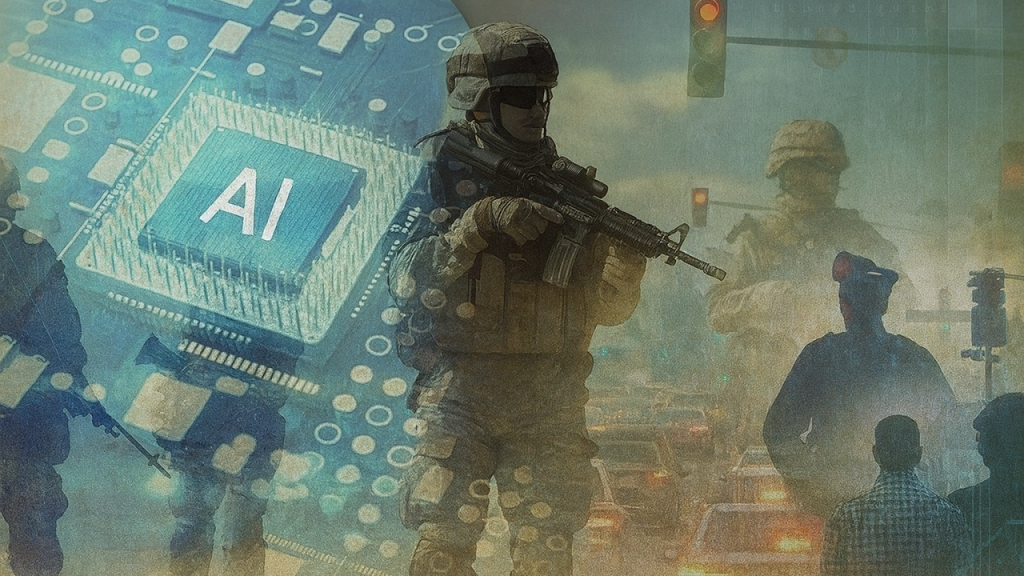
While all pillars address domestic issues, the last pillar addresses an important dimension that may be an outcome of geopolitical realities. Technology politics is a reality now; it has become the central point of the US-China great-power competition, resulting in a fragmented landscape with incompatible technical standards, politicised supply chains and growing pressure on middle and smaller states to choose a side. For Pakistan, technology can be both a benefactor and a challenge when viewed through this lens, and that is where the last pillar becomes essential. It explicitly states that “AI is now a determinant of national power and a domain of geopolitical competition” and that Pakistan must “position itself to benefit from multiple ecosystems without becoming dependent on a single supplier or bloc”.
Pakistan’s national AI policy’s sixth pillar allows it to sign bilateral and multilateral agreements with leading technology nations; join global AI forums to both learn and contribute to best practices; and take part in collaborative cross-border projects while adopting global standards for interoperability. These facets are a deliberate attempt to secure policy optionality. The policy commits to developing “sovereign datasets, scalable computer infrastructure, and indigenous AI models” to reduce vulnerability to technology denial regimes. Its clause on “AI ecosystem interoperability” notes the need to ensure compatibility with “both open-source frameworks and proprietary platforms of strategic partners” which in practice allows Pakistan to integrate AI from China for rapid deployment while participating in Western AI safety and ethics initiatives. By embedding requirements for “data residency, algorithmic transparency and ethical AI compliance” into procurement and governance, the policy seeks to maintain neutrality while aligning with international norms, creating diplomatic room to manoeuvre in a time where AI supply chains are increasingly politicised.
The policy’s emphasis on standards alignment also points to a broader challenge: Pakistan’s limited participation in international standards bodies such as the ITU, ISO and 3GPP, where the rules on AI ethics, 5G security and quantum encryption are being set. Without representation in these forums, Pakistan risks becoming a passive consumer of standards defined by others, undermining its long-term technological sovereignty.
Beyond AI, the broader technology landscape is increasingly shaped by geopolitical forces. In telecom, Pakistan’s PTA is gearing up for a 5G spectrum auction in mid-2025. At the GSMA Digital Nation Summit in Islamabad, the promise of transformative digital connectivity was tempered by a warning: spectrum prices could be set so high that they effectively stifle adoption before it begins. Open-RAN architectures offer much-needed vendor diversity, yet they introduce their own challenges: security vulnerabilities and interoperability risks that Pakistan cannot afford without bolstering national testing capacity.