Sir Mark Tully, the BBC’s ‘voice of India’, dies aged 90
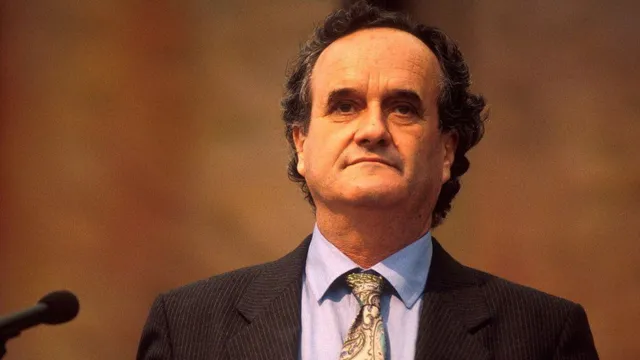
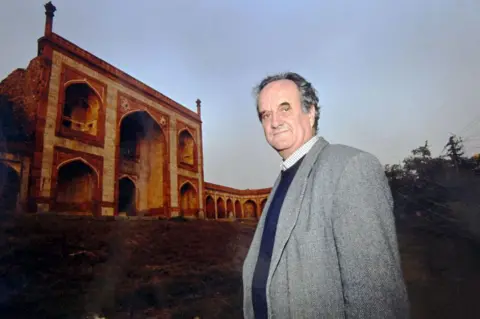
The broadcaster and journalist Sir Mark Tully – for many years known as the BBC’s “voice of India” – has died at the age of 90.
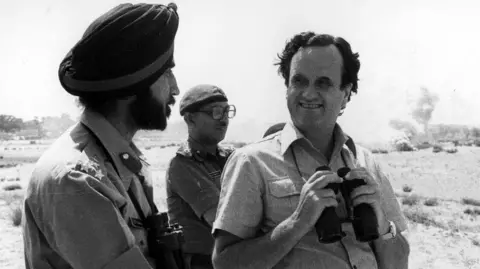
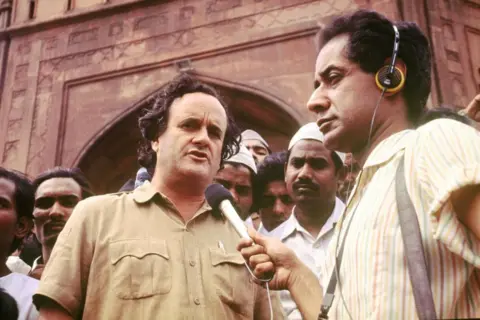
For decades, the rich, warm tones of Sir Mark were familiar to BBC audiences in Britain and around the world – a much-admired foreign correspondent and respected reporter and commentator on India. He covered war, famine, riots and assassinations, the Bhopal gas tragedy and the Indian army’s storming of the Sikh Golden Temple.
In the small north Indian city of Ayodhya in 1992, he faced a moment of real peril. He witnessed a huge crowd of Hindu hardliners tear down an ancient mosque. Some of the mob – suspicious of the BBC – threatened him, chanting “Death to Mark Tully”. He was locked in a room for several hours before a local official and a Hindu priest came to his aid.
The demolition provoked the worst religious violence in India for many decades – it was, he said years later, the “gravest setback” to secularism since the country’s independence from Britain in 1947.
“We are sad to hear the passing of Sir Mark Tully,” Jonathan Munro, Interim CEO of BBC News and Current Affairs, said in a statement. “As one of the pioneers of foreign correspondents, Sir Mark opened India to the world through his reporting, bringing the vibrancy and diversity of the country to audiences in the UK and around the world.
“His public service commitments and dedication to journalism saw him work as a bureau chief in Delhi, and report for outlets across the BBC. Widely respected in both India and the UK, he was a joy to speak with and will be greatly missed.”
India was where Sir Mark was born – in what was then Calcutta (now Kolkata) in 1935. He was a child of the British Raj. His father was a businessman. His mother had been born in Bengal – her family had worked in India as traders and administrators for generations.
He was brought up with an English nanny who once chided him for learning to count by copying the family’s driver: “that’s the servants’ language, not yours”, he was told. He eventually became fluent in Hindi, a rare achievement in Delhi’s foreign press corps and one which endeared him to many Indians for whom he was always “Tully sahib”. His good cheer and evident affection for India won him the friendship and trust of many of the top rank of the country’s politicians, editors and social activists.