Pakistan, Afghanistan agree to ‘reopen border’ within 48 hours
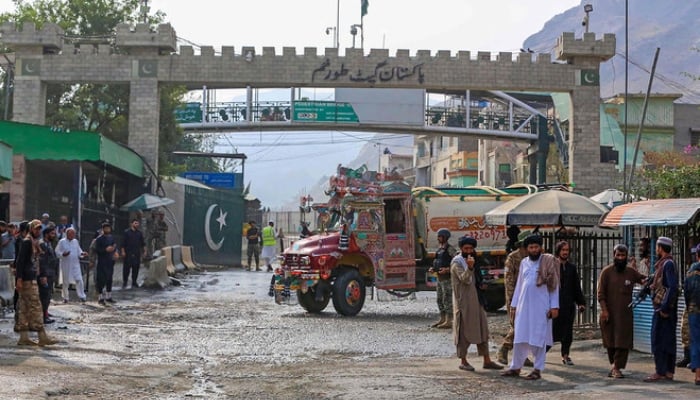
The border between Pakistan and Afghanistan is expected to reopen within 24 to 48 hours following an agreement between officials from both countries, sources told Geo News on Monday.
The development comes a day after the two neighbouring countries agreed to a ceasefire, following week-long border clashes.
The sources privy to the matter said that officials have agreed to reopen the border if no other dispute arises.
Pakistan closed the Torkham and Chaman borders with Afghanistan on October 12 after the Afghan Taliban, in association with their affiliated militants, attacked multiple Pakistan Armed Forces’ posts along the border.
The border clashes between forces from the two countries began on the night between October 11 and 12 after the Afghan Taliban and militants launched unprovoked attacks against Pakistan’s border posts.
The resulting clashes led to the killing of over 200 Taliban and affiliated militants, while 23 Pakistani soldiers were martyred defending the motherland, the Inter-Services Public Relations (ISPR) said.
Pakistan also conducted “precision strikes” deep inside Afghanistan, targeting terrorists in Kandahar province and Kabul. A temporary 48-hour ceasefire was announced on October 15 at Afghanistan’s request.
The temporary ceasefire was extended for another 48 hours on October 17 as delegations from the two countries headed to Doha, Qatar, for further negotiations.
Pakistan and Afghanistan agreed to an immediate ceasefire during the Qatar-mediated talks on Sunday.
Defence Minister Khawaja Muhammad Asif announced the deal for a ceasefire, with both sides scheduled to meet again on October 25 in Istanbul, Turkiye, to discuss “detailed matters”.
Taliban spokesperson Zabihullah Mujahid also confirmed the development, saying that the parties agreed on a complete and meaningful ceasefire.
‘Terrorism main reason behind tensions’
During an interview with Al-Jazeera Arabic, Asif said that the Afghan defence minister acknowledged that terrorism was the key reason behind the tensions between the two countries.
The primary objective of the ceasefire is to eliminate terrorism, he said, adding that both countries concluded that immediate elimination of terrorism was essential.
Asif maintained that terrorism had been affecting the border areas of Pakistan and Afghanistan for years.
The defence minister stated that the two neighbouring countries, after the ceasefire, will make “serious efforts to curb terrorism”.
Failure to do so could pose serious threats to regional peace, he added.
Asif expressed hope that peace will return to the region after the ceasefire and relations will normalise between Pakistan and Afghanistan.
The resulting normalisation will also lead to the resumption of trade and transit and Afghanistan will be able to use Pakistani ports, he said.